Research Data Analysis 2024
The analysis of data from the 2024 season enabled an in-depth comparison with results from the previous year, as well as the development of combined models that account for seasonal and environmental variability.
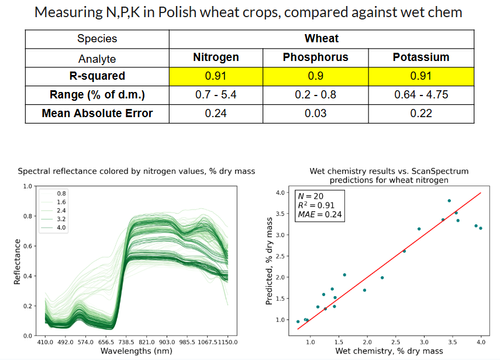
During the current research campaign, spectral data were collected in parallel using two versions of the spectrometer: an older model with a narrower spectral range and lower precision, and a newer version characterized by an extended spectral range and higher measurement resolution. A key focus of the analysis was to evaluate whether a smaller number of measurements obtained with a more advanced device could outperform a larger dataset collected using the older instrument.
In all cases, data representativeness and an appropriate distribution of values across the analyzed range were maintained, ensuring the reliability of comparisons. The results indicate that, with properly designed sampling strategies, data obtained from the newer spectrometer can provide comparable—and in some aspects superior—predictive performance.
Regardless of the spectrometer version, the results were sufficient to confirm its applicability. However, the newer device, characterized by lower noise levels and a broader measurement range, demonstrated significantly higher accuracy, which is expected to enhance the overall value of the system for end users.
The collected data and conducted analyses constitute a valuable reference dataset for the further development of projects carried out by QED. They not only enabled the evaluation of the effectiveness of applied measurement methodologies but also helped define the required levels of accuracy for reliable plant parameter analysis.
Based on these findings, it was possible to validate assumptions regarding the minimum number of samples necessary to obtain statistically reliable results. This has direct implications for optimizing future field campaigns in terms of time efficiency, resource allocation, and cost-effectiveness.